
Want to hear the latest episodes? Follow You Are My Witnesses on any of the following platforms:
Current Episode
Pick Up Your Sword in 5787!
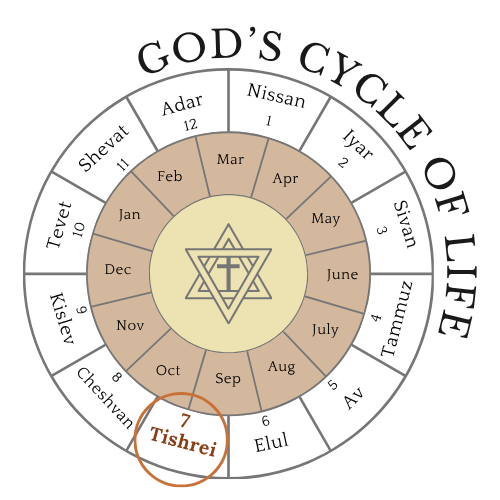
Tishrei: A Season of Return
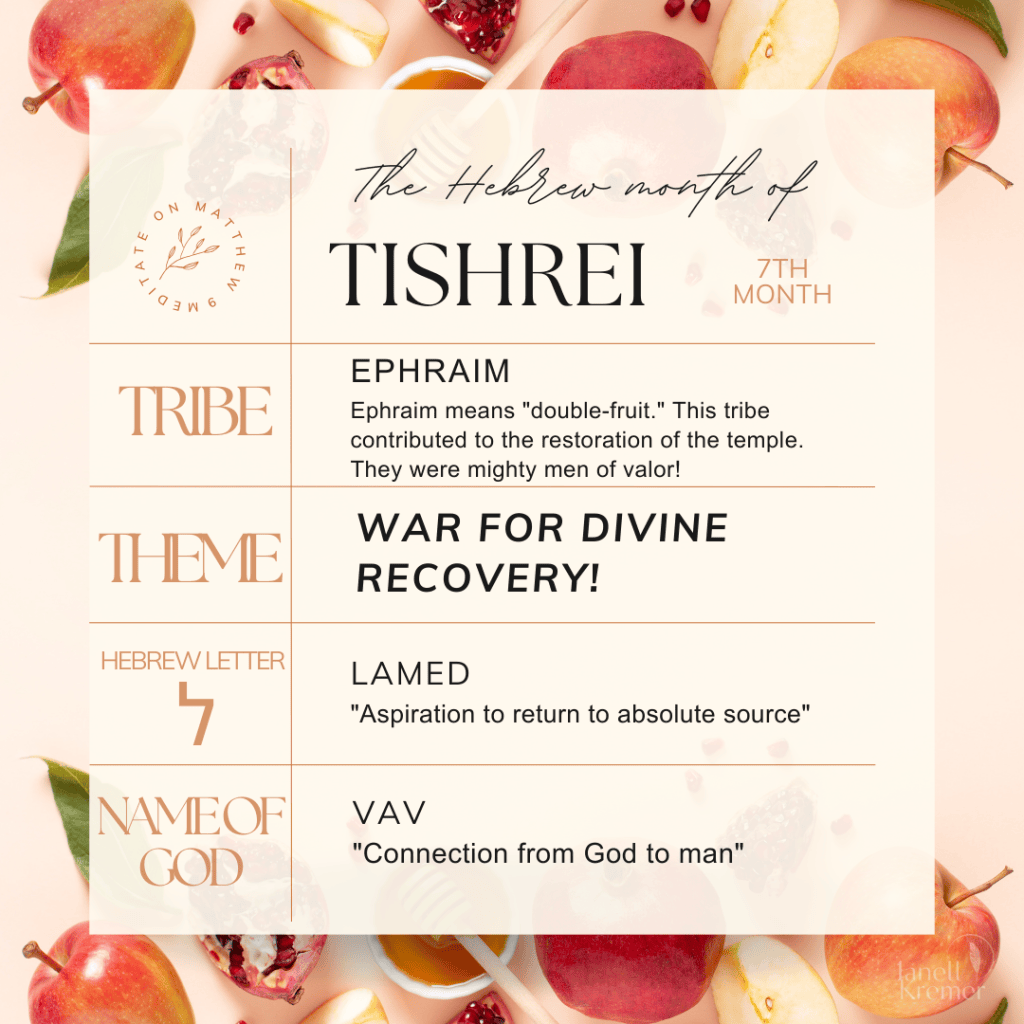
The month of Tishrei is one of the most significant months on the Hebrew calendar. It begins the Hebrew civil year and contains three major appointed times: the Feast of Trumpets, also known as Rosh Hashanah; the Day of Atonement, or Yom Kippur; and the Feast of Tabernacles, or Sukkot. These are called the mo’edim—the appointed times of Yahweh.
Whenever I talk about the Hebrew feasts and the appointed times of God, I think it is important to clarify what Scripture actually teaches about them. The early church emerged primarily from the Jewish people, but as the gospel spread to the Gentiles, a significant conflict arose over whether Gentile believers were required to follow Jewish laws and traditions. Paul, who was specifically called as an apostle to the Gentiles, confronted this issue directly. The message of the early church was clear: salvation comes through faith in Jesus Christ and His finished work, not through our ability to observe the Law or celebrate the biblical feasts.
Jesus fulfilled the Law. The Law was never intended to be the means by which humanity earned right standing with God. Instead, it revealed our sinfulness and showed us how desperately we needed a Savior. Throughout Scripture, the Law also prophetically pointed toward Jesus—the One who would accomplish what we never could. Therefore, celebrating the feasts does not make us more righteous than another believer, nor does our knowledge of the Hebrew calendar make us spiritually superior. As Paul reminds us, “Knowledge puffs up, but love builds up.”
But here’s the beautiful thing: just because we aren’t commanded to celebrate these feasts doesn’t mean there is nothing for us to learn from them. The appointed times reveal something about God’s rhythms, His character, and His redemptive story. Ultimately, the feasts point us toward Jesus. The spring feasts point toward what He has already accomplished through His first coming, while the fall feasts point toward the things that will ultimately find their fulfillment when He returns.
This makes Tishrei a particularly significant season to pause and reflect. It is a season associated with return, repentance, reflection, renewal, and rejoicing. It is an invitation to come back into alignment with God and to remember that He has not abandoned us in the changing seasons of our lives.
The Good Shepherd in the Valley
If you’ve read my book Now My Eyes See You, you know that I talk often about the importance of seasons and learning to follow our Good Shepherd through them. There is something beautiful about the picture of a shepherd bringing his sheep down from the high places as the seasons change. The sheep move into closer care and protection as they enter the valleys and prepare for the colder months.
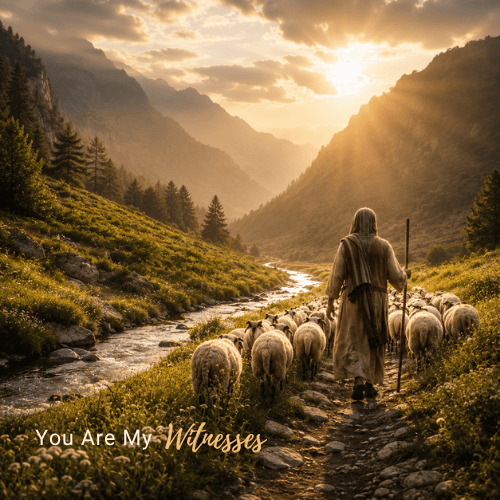
Psalm 23 gives us such a beautiful picture of this reality. “Even though I walk through the valley of the shadow of death, I will fear no evil, for you are with me.” The promise of the Good Shepherd isn’t that we will never walk through valleys. The promise is that He will be with us in the valley. When we cannot see a way forward, He is there. When there is a mountain standing in our way, He is there. When we find ourselves in the low places of life, His presence has not left us.
In the previous episode, we talked about identity and Moses’ question, “Who am I?” God’s response is fascinating. He didn’t give Moses a list of qualifications or tell him to become more confident in himself. He simply said, “I will be with you.”
I believe that is one of the messages of Tishrei: I will be with you. The appointed times of God remind us that we were created to live in nearness to our Good Shepherd. We were never meant to navigate the changing seasons of life alone.
The Decade of the Mouth
We are still living in the Hebrew decade associated with the letter peh, which is pictured as a mouth. When I look at this decade, I can’t help but think about the enormous emphasis we have seen on voices, communication, speech, and what people are willing—or unwilling—to say.
The decade began in 2020, a year when there was an enormous focus on our mouths and whether they would be covered or uncovered. I want to be careful here. I’m not saying that every natural event was directly caused by a supernatural enemy strategy. But I do believe that God can use circumstances to highlight spiritual themes that deserve our attention. One theme I believe we should pay attention to is the power of our voice.
The enemy would love to silence God’s people. But our voices are needed.
At the same time, we are living in a generation overflowing with voices. More people are preaching, teaching, creating content, and sharing their opinions than ever before. Everyone seems to have a platform—and apparently everyone has a podcast now, including me! But here’s the problem: not every voice is speaking truth.
That means the emphasis on the mouth must also be connected to our ears. We don’t just need to speak; we need to listen. We need to hear the voice of God. We cannot discern truth simply because someone speaks confidently, has a large platform, or uses Christian language. We need to know the voice of our Good Shepherd.
Jesus said, “My sheep hear my voice, and I know them, and they follow me.” The ability to recognize His voice is essential in a season filled with competing voices.
The Sound of the Shofar
Do you know what announces the beginning of Tishrei and the Feast of Trumpets? The sound of the shofar. Throughout Scripture, the shofar carries powerful imagery. It can announce, gather, warn, celebrate, and awaken. It is a sound that says, Pay attention, wake up! The King is coming!

Perhaps that is exactly what some of us need to hear as we enter this new season. Wake up. Pay attention. Listen again.
I believe one of the enemy’s strategies in this season is fear. Fear of what people will think. Fear of rejection. Fear of being misunderstood. Fear of being labeled. Fear of losing relationships. Fear of saying the wrong thing. Fear can make us shrink back from the very assignment God has given us.
But Jesus warned His followers that following Him would bring opposition. It would bring confrontation. It would sometimes cost us something. So what do we do? We don’t shrink back.
That doesn’t mean we become loud simply for the sake of being loud. Our assignment is to be faithful with our voice. Think about the person blowing the shofar from the wall of a city. If they see an enemy approaching, they don’t apologize because the alarm is too loud. They don’t stop to ask whether everyone wants to hear it. They sound the alarm because they have been entrusted with a message.
What message had God entrusted you with in this season? Has fear stopped you from saying what God has asked you to say?
Our words should cut through the noise—not with anger, arrogance, or hostility, but with truth.
5787: The Year of the Sword
As we enter the Hebrew year 5787, we encounter another significant picture. The number seven is traditionally associated with the Hebrew letter zayin, which carries imagery connected with a weapon or sword. While Scripture does not specifically declare 5787 to be “the year of the sword,” this biblical imagery provides a powerful framework for prayerful reflection as we enter the new year.
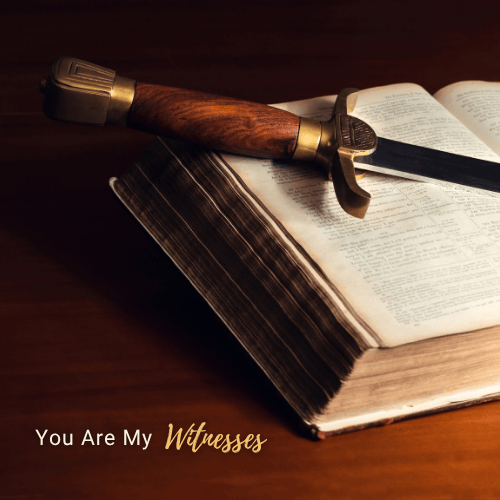
And what does a sword do? It cuts, separates, divides, and demolishes.
God’s Word does something similar.
Hebrews 4:12 tells us that the Word of God is living and active, sharper than a two-edged sword, penetrating deeply and discerning the thoughts and intentions of the heart. And this is where the message becomes deeply personal.
The sword isn’t primarily about your neighbor. It isn’t about your family. It isn’t about your boss or the person who frustrates you. It’s about you.
It’s about what God’s Word is doing inside your heart.
The question I believe Jesus has been asking me in this season is, “What needs to be cut away in my life?”
And now I want to ask you the same question: What has the Spirit of the living God been revealing to you that needs to be cut away?
What Needs to Be Cut Away?
Maybe it’s striving. Maybe you’ve been striving for perfection or trying to earn God’s approval through performance. Maybe it’s fear. Maybe distractions have slowly taken up the space that once belonged to God. Perhaps there is something deeper that you’ve been hiding from—a place of shame, unforgiveness, disappointment, or pain.
Maybe there are lies you’ve believed about yourself. Maybe there are lies you’ve believed about God.
What needs to be cut away?
This isn’t simply behavior modification. God isn’t interested in helping us become better at managing our external behavior while leaving the heart untouched. He goes deeper. He addresses our motives, our intentions, our emotions, and the hidden places that no one else can see.
This is part of the biblical picture of the circumcision of the heart. Consecration means surrendering those places to God and allowing His Word to cut away what doesn’t belong.
And yes, the sword cuts. But the sword isn’t only about cutting things off. The sword also cuts a path forward.

When everything around us feels chaotic, God’s Word gives us direction. When countless voices are telling us what to believe, His truth brings clarity. When we don’t know which way to go, we can listen for the voice of our Good Shepherd.
Jesus said, “My sheep hear my voice, and they follow me.”
Seven: Completion, Rest, and Consecration
Throughout Scripture, the number seven repeatedly appears in connection with powerful themes. One of those is completion. The Hebrew word sheva, meaning seven, is related to sava, carrying the idea of fullness or being satisfied. I find that fascinating because so much of our lives are spent trying to become complete.
We accomplish more. We consume more. We chase more. We accumulate more. Yet somehow, we still don’t feel satisfied. But there is a fullness that cannot be found in achievement. There is a completeness that only God can provide.
Seven is also connected with rest. God created for six days and rested on the seventh. He then invited His covenant people into a rhythm of Sabbath rest. Ultimately, Scripture points us toward a greater rest found in Christ and the future fullness of God’s kingdom.
Seven is also connected with consecration. Aaron and his sons were set apart for priestly service through a seven-day process of consecration, and the altar was likewise consecrated over seven days. Throughout Scripture, we repeatedly see seven appearing in connection with holiness, sacrifice, cleansing, and being set apart.
We also see seven woven throughout God’s appointed rhythms. There are seven major annual appointed times, and after seven cycles of seven years came the fiftieth year of Jubilee, a time associated with liberty and restoration.
So perhaps entering 5787 gives us an opportunity to ask a different kind of question. Instead of asking, “What more do I need to accomplish?”, perhaps we should ask, “Where is God inviting me to stop striving and start abiding?”
What If Obedience Looks Like Rest?
We often assume spiritual growth means doing more. More Bible studies, more opportunities to serve, more projects, more activity, more responsibility. But sometimes obedience looks like stopping, resting, listening, and realigning.
God isn’t simply counting our days. He is inviting us to live our days with Him. Even the moments we think are wasted are not wasted when they are surrendered to God. He is present in them. He is speaking in them. And sometimes the thing God wants to show us will only become clear when we become quiet enough to listen.
Pressing Through the Crowd
There is another picture from Scripture that I believe speaks powerfully to this season: the woman who had suffered from an issue of blood for twelve years.
For twelve years, she had suffered. She had experienced isolation and was considered ceremonially unclean. Yet when she heard about Jesus, she pressed through the crowd. She believed that if she could simply touch His garment, she would be healed.
She wasn’t simply reaching for clothing. She was reaching for Jesus.
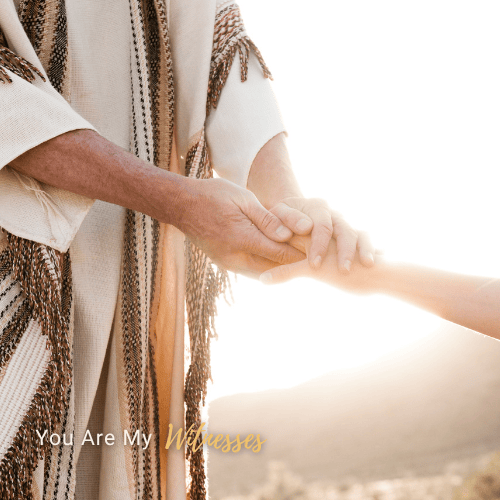
And Jesus didn’t shame her when she touched Him. He didn’t push her away. He called her daughter.
Think about the power of that moment. This woman had spent years being defined by her condition, but an encounter with Jesus revealed something deeper about who she was. She was a daughter.
I believe this is a word for some people entering 5787. You’ve been looking for your identity in all the wrong places. You’ve been looking for it in what you accomplish, what you produce, your title, your assignment, your failures, or the approval of other people.
But your identity isn’t ultimately found in what you do, it’s found in whose you are. You are a son. You are a daughter. You belong to the Most High God.
What Does 5787 Look Like?
So what does 5787 look like for us?
I believe it is a year to press into His presence and refuse to allow busyness, fear, disappointment, or shame to keep us at a distance. It is a year to become good stewards of our souls, to speak truth to the deepest places within us, to strengthen ourselves in the Lord, and to align our lives with His purposes.
One of the purposes of every child of God is to know Him and make Him known. So how are you using your voice in this season? Are you using it to glorify God? To encourage someone who has lost hope? To proclaim truth? To share the good news?
Maybe there are difficult conversations you need to have with someone you love. Maybe there is something God has asked you to say that fear has kept you from saying. Don’t let fear make your voice smaller than God’s assignment.
But as we use our voices, we also need discernment. Not every prophetic word is from God simply because someone calls it prophetic. We test it against Scripture. We consider God’s character. We pray. We bring it before mature believers who can help us discern and weigh it.
We don’t blindly accept every prophetic claim, but neither should we develop such a suspicious spirit that we refuse to believe God could speak. We test, discern, pray, and trust.
Prophetic words can be like seeds. They may begin small. We may not see immediate results. But when God has spoken, we can trust His character and His timing.
A Prepared Heart, a Listening Ear, and a Sword
As we enter 5787, I believe there is an invitation before us. It isn’t an invitation to become more religious or to prove ourselves through greater spiritual activity. It is an invitation to draw near and to pick up the sword.
5787 is an opportunity to come before God with a prepared heart, a surrendered life, a listening ear, a courageous voice, and the sword of His Word in your hand.
So I want to leave you with some questions to take into prayer and journaling:
- What is God asking me to return to?
- What has fear caused me to stop saying?
- What needs to be cut away by the truth of God’s Word?
- Where am I striving instead of resting?
- And what would it look like for me to press into Jesus this year?
But perhaps the greatest question is this:
Who is God asking me to become as I walk with Him through 5787?
Don’t Be Afraid of the Sword
Friend, as you enter 5787, don’t be afraid of what needs to be cut away. Don’t be afraid to use your voice. Don’t be afraid to press through the crowd. And don’t be afraid to slow down.
Yahweh, the God who marks the seasons, is the God who walks with you through them.
So pick up your sword and open His Word. Let it penetrate the deepest places of your heart. Listen for the voice of your Good Shepherd. Press into His presence. And step into this new year with faith—as His witness.
Bring the Fall Feasts Into Your Home

If you want to go deeper with your family into this season, I’ve created a Fall Feasts Guide for Families—an easy-to-follow ebook that walks you through the meaning and beauty of the Feast of Trumpets (Yom Teruah), the Day of Atonement (Yom Kippur), and the Feast of Tabernacles (Sukkot).
This guide is designed to help you not just learn about the feasts, but to experience them together as a family in a meaningful, Christ-centered way.
Grab the guide and step into the rhythm of God’s appointed times with intention and joy. Make sure you listen to this episode of the podcast to get your discount code for 40% off this guide!
As you enter 5787, remember: you don’t have to be afraid of the cutting when you trust the hands of the One holding the sword. His Word doesn’t cut to destroy you. It cuts away what is keeping you from walking more fully in truth, freedom, holiness, and intimacy with Him.
The sword cuts, the Word reveals, the Shepherd leads, and the King is coming.
Pick up your sword. Listen for His voice. Press into His presence. And enter 5787 as His witness.
Discovering the Hebrew Months Newsletter
Understanding the Times and Seasons
Become a Steward of Time
Discovering the Hebrew months helps you see how the Old Testament points to Jesus and discern God’s timing, so you can stay aligned with His Spirit.
Click here to subscribe.
Subscribe below to get updates on new episodes:
*Music by LiteSaturation, Music Unlimited, soundbay, and Silentvoice from Pixabay


Leave a Reply